Voter ID Card New Update 2026: Election identity verification is moving toward faster digital services, reduced paperwork, and easier correction workflows, and the latest update focuses directly on simplifying voter data management. With more citizens shifting to online government services, the Election Commission is expanding digital correction tools and introducing stronger digital identity formats. The 2026 update mainly targets faster online edits, digital voter card access, and stronger database matching to reduce duplicate or incorrect voter records.
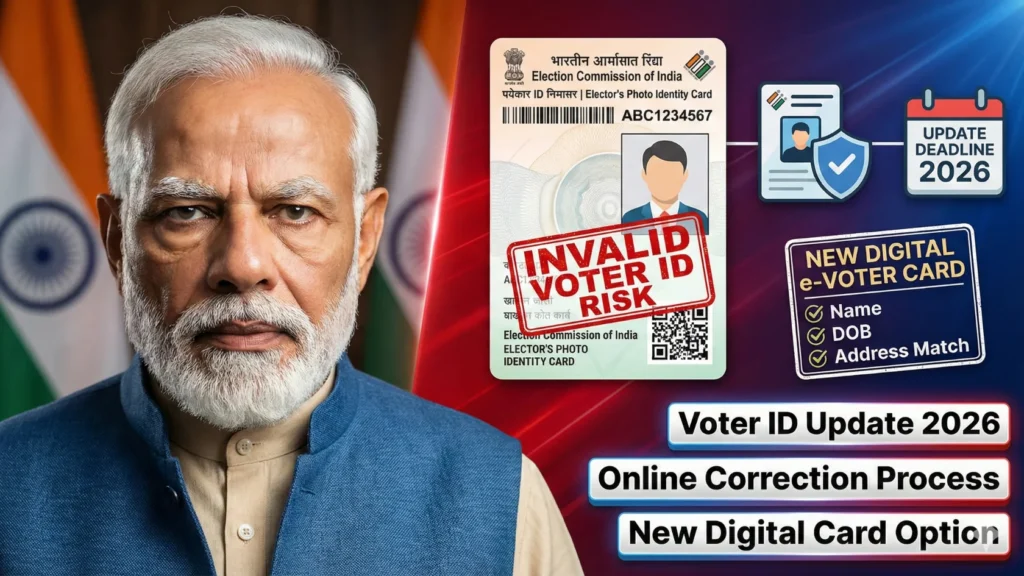
Simplified Online Correction Process
The online correction process is expected to become more automated using Aadhaar-based identity verification and database cross-checking. Name correction, address update, date of birth change, and constituency transfer requests can be submitted fully online. Earlier correction timelines could take 20–30 days. With digital verification expansion, many standard corrections may get processed within 5–15 working days depending on document clarity and database match results.
New Digital Voter ID Card Option
The digital voter card option is expected to allow citizens to download a secure digital version of their Voter ID through official portals. The digital card may include QR-based verification, allowing instant authenticity checks during elections or KYC use cases. This reduces dependency on physical card reprint requests and supports mobile-based identity storage similar to other government digital documents.
Document Verification and KYC Integration
New correction workflows are expected to rely more on digitally verifiable documents such as Aadhaar, DigiLocker records, and government-issued digital certificates. This reduces fake document uploads and speeds up approval. Real-time database validation may reduce manual verification delays. However, physical verification may still be required in address-sensitive or high-mismatch cases.
Duplicate and Fake Voter Record Control
The update also focuses on reducing duplicate voter IDs through stronger database linking and demographic data matching. AI-based pattern detection may help identify suspicious duplicate registrations across states or districts. This improves voter database accuracy and reduces election fraud risk over time.
Application Cost and Processing Reality
Most voter correction and digital card download services remain free for citizens when done through official portals. Physical card reprint requests may include small printing and postal charges depending on state process rules. Online correction remains the fastest and lowest-cost method for most users.
Impact for Voters in 2026
Faster correction timelines reduce the risk of voters missing elections due to wrong data. Digital voter card access improves convenience during elections and identity verification. Rural and small-town users benefit from reduced physical office visits. Overall, the system is moving toward fully digital voter identity lifecycle management.
Disclaimer: This article is for informational purposes only. Voter ID correction rules, digital card availability, processing timelines, and verification requirements may change based on Election Commission notifications and state-level implementation. Citizens should verify latest updates through official election portals before applying for corrections.