Tata Solar Rooftop System: Homeowners are now calculating electricity cost per unit, long-term savings, and subsidy-adjusted installation cost before choosing solar, and this viral pricing discussion directly targets those factors. Reports mentioning a ₹75,000 starter entry and strong daily generation numbers have pushed rooftop solar back into mass discussion. While exact configuration depends on state subsidy and roof size, Tata-backed solar EPC solutions are already widely used in residential installations across India, especially for 2BHK–4BHK independent homes.
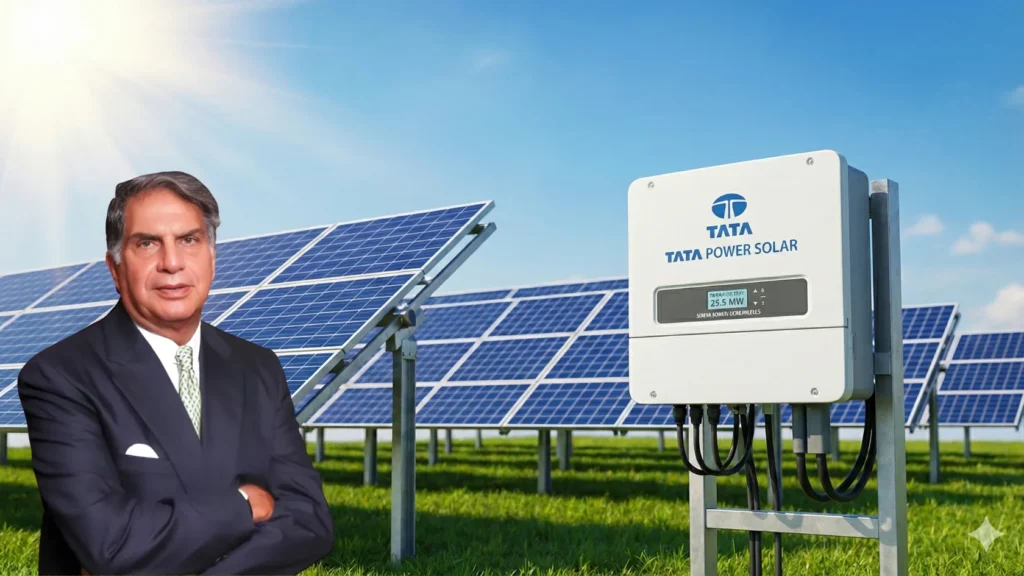
System Configuration and Installation Setup
A typical 4kW residential rooftop solar system usually requires around 350–400 square feet shadow-free roof space. The setup generally includes 10–12 high-efficiency mono PERC solar panels, a grid-tied inverter, mounting structure, DC wiring, AC distribution box, and net metering integration. Installation time usually takes 2–4 days after site approval. Most modern systems are designed for 20–25 year panel life, while inverter replacement may be required after 8–12 years depending on usage and brand quality.
Daily Power Generation and Output Reality
A properly installed 4kW rooftop solar system in India can generate around 16–22 units per day depending on location, season, and sunlight exposure. North India averages closer to 16–18 units daily annually, while Western and Southern states can reach 18–22 units average. During summer peak sunlight months, generation can cross 24 units per day. Annual generation for a 4kW system usually falls between 6,000 to 7,500 units per year under normal conditions.
Electricity Bill Savings and Net Metering Impact
If average household consumption is 500–700 units monthly, a 4kW system can offset most of the daytime electricity usage. At ₹7–₹9 per unit electricity tariff, monthly savings can realistically fall between ₹2,500 to ₹4,000 depending on usage pattern. With net metering enabled, excess daytime generation is exported to the grid, which further reduces monthly bill liability. Payback period usually ranges between 4 to 6 years after subsidy benefits.
Warranty, Maintenance and System Life
Most Tier-1 solar panels come with 10–12 year product warranty and 25 year performance warranty ensuring at least 80 percent output after 25 years. Maintenance is minimal and usually involves panel cleaning every 15–30 days depending on dust levels. Inverter warranty typically ranges between 5 to 10 years. No moving parts mean very low maintenance cost compared to generator or inverter battery backup systems.
Price and Subsidy Reality in 2026
The ₹75,000 starter pricing viral figure likely refers to smaller 1kW–1.5kW entry systems after subsidy. A full 4kW rooftop system installed cost typically falls between ₹2.2 lakh to ₹2.8 lakh before subsidy. Under central subsidy schemes, residential users can receive ₹78,000 to ₹1.08 lakh subsidy depending on state and category. After subsidy, effective cost can drop near ₹1.5 lakh to ₹1.9 lakh. Financing options may allow ₹25,000–₹40,000 down payment and roughly ₹3,500–₹5,500 EMI depending on loan tenure.
Disclaimer: This article is for general informational purposes only. Solar generation, pricing, subsidy amount, and savings depend on location, roof direction, DISCOM rules, and policy updates. Buyers should verify latest subsidy and technical feasibility with authorised solar installation partners before installation.