Reliance Solar Panel: Home solar buyers are now checking real daily unit generation, subsidy-adjusted system cost, and payback years before investing, and this viral announcement directly targets those expectations. Reports claiming ₹55,000 entry pricing and 3kW generation capability have created strong discussion among middle-class homeowners looking to reduce electricity bills. However, there is no detailed official technical sheet publicly confirmed yet. If such pricing includes subsidy-adjusted entry systems, this could push rooftop solar adoption deeper into small-town and middle-income housing segments.
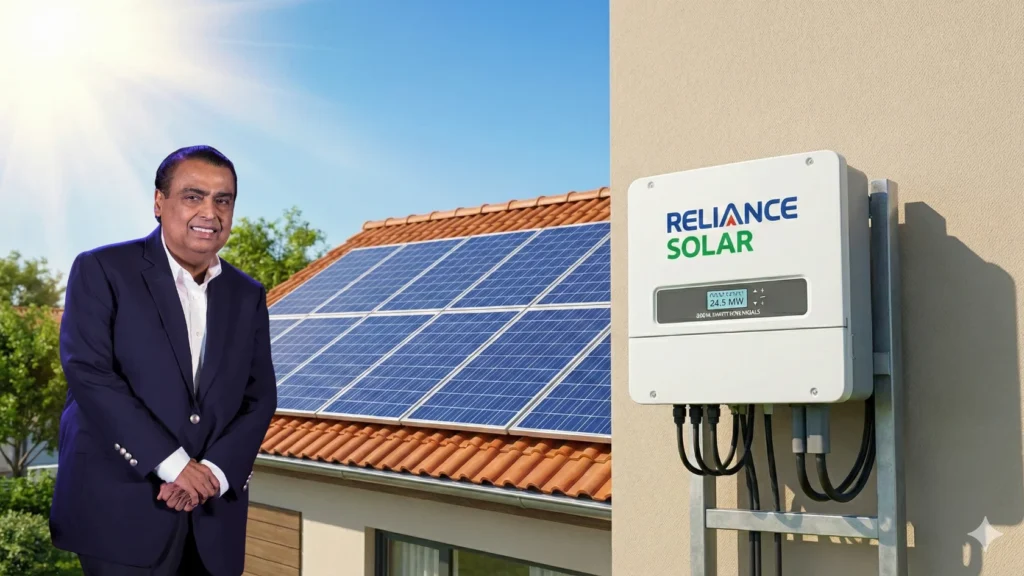
System Configuration and Installation Setup
If positioned as a residential starter solar kit, a 3kW rooftop system would typically need around 250–300 square feet shadow-free roof area. The setup would likely include 7–9 high-efficiency mono PERC solar panels, a grid-tied inverter, mounting structure, DC wiring, AC safety box, and net metering connection. Installation usually takes 2–3 days after site inspection. Panel life expectancy usually stays near 25 years, while inverter replacement may be required after roughly 8–10 years.
Daily Power Generation and Real Output
A 3kW rooftop solar system in India usually generates around 12–16 units per day depending on sunlight hours and geographic location. North India annual average usually stays near 12–14 units per day, while western and southern states may reach 14–16 units average. In peak summer sunlight, daily generation can cross 18 units temporarily. Annual output normally falls between 4,500 to 5,800 units depending on installation quality and roof direction.
Electricity Bill Savings and Net Metering Benefit
For homes consuming 350–500 units monthly, a 3kW system can offset most daytime electricity usage. At ₹7–₹9 per unit tariff, realistic monthly savings may fall between ₹2,000 to ₹3,500 depending on usage pattern and net metering availability. If net metering is active, extra daytime generation credits reduce night-time grid consumption bills, improving overall savings performance.
Warranty, Maintenance and Long-Term Reliability
Most Tier-1 solar panels offer 10–12 year product warranty and 25 year performance warranty guaranteeing roughly 80 percent output after 25 years. Solar systems require basic cleaning every 2–4 weeks in dusty areas. Inverter warranty typically ranges between 5 to 10 years depending on model. No fuel cost and minimal moving parts make long-term maintenance predictable.
Price and Subsidy Reality (Expected Structure)
The ₹55,000 viral price likely refers to small 1kW–1.5kW starter systems after subsidy adjustment rather than full 3kW installation cost. A full 3kW rooftop system installed cost usually ranges between ₹1.7 lakh to ₹2.2 lakh before subsidy. After subsidy benefits, effective cost could fall near ₹1.2 lakh to ₹1.6 lakh depending on state policy. Financing may allow ₹20,000–₹35,000 down payment and roughly ₹3,000–₹4,500 EMI depending on loan tenure.
Disclaimer: This article is based on early reports, viral claims, and typical solar system industry benchmarks. Final specifications, pricing, subsidy structure, and generation output may vary by state, DISCOM rules, and final product launch details. Buyers should verify details with authorised solar EPC partners before making purchase decisions.