PAN Card New Rules 2026: Financial compliance is now moving toward stricter identity verification, faster digital updates, and stronger fraud control, and the new PAN update framework directly reflects that shift. With increasing digital banking, online investments, and loan approvals linked to PAN verification, the government is tightening KYC linking rules and update timelines. The 2026 changes mainly focus on Aadhaar verification, faster correction processing, and stricter penalties for mismatch or inactive PAN usage.
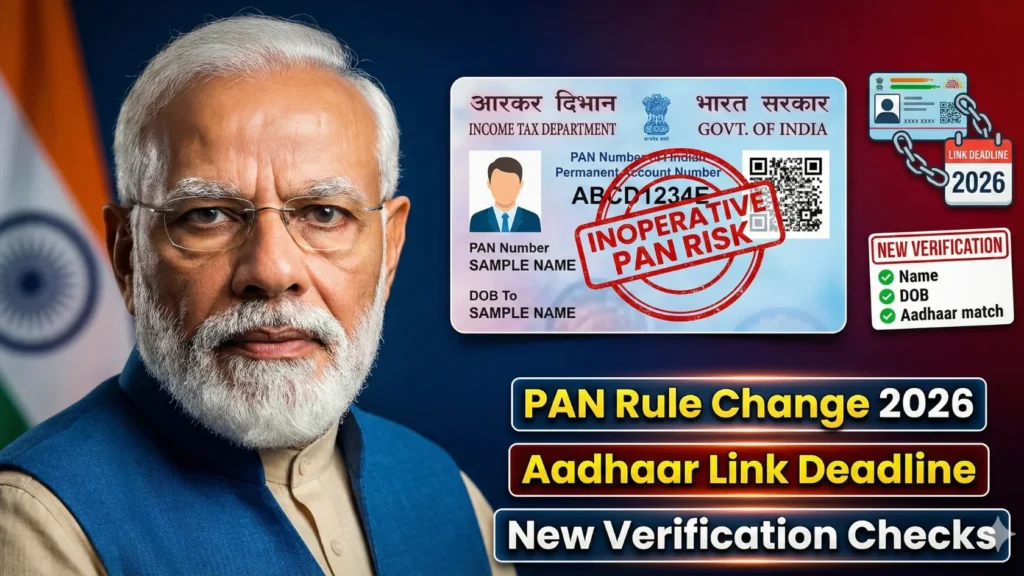
New PAN KYC Linking Requirement
Under updated KYC rules, PAN must remain linked with Aadhaar for most financial activities including bank accounts, mutual funds, stock trading, and loan processing. If PAN–Aadhaar linking is not completed, PAN may become “inoperative,” meaning financial transactions like TDS credit, ITR processing, and high-value transactions may get blocked. The linking process continues to remain online through official portals and generally takes a few minutes if Aadhaar mobile OTP is active.
Faster PAN Update and Correction Processing
PAN correction requests like name change, address update, and date of birth correction are expected to move toward faster digital approval timelines. Earlier processing could take 15–30 days. With document OCR verification and digital database matching, processing time is expected to reduce to around 3–10 working days for most standard correction cases. Physical document submission is expected to reduce significantly except in high-risk mismatch cases.
New Digital Document Verification Rules
KYC updates will increasingly depend on digitally verifiable documents. Aadhaar, DigiLocker documents, and government digital certificates may get priority over manual document upload. This reduces fraud attempts using fake scanned documents. Real-time verification against government databases is expected to become standard for PAN updates, bank KYC, and financial onboarding.
PAN Misuse and Penalty Monitoring
Tax authorities are strengthening PAN misuse tracking using AI-based transaction monitoring. If one PAN is used across multiple suspicious financial accounts or unusual high-value transactions, automated alerts may trigger compliance checks. Penalties for incorrect PAN usage in financial transactions may continue under existing Income Tax Act provisions, which can include fines starting from ₹10,000 in certain non-compliance cases.
Impact on Salaried Employees and Small Businesses
For salaried individuals, PAN compliance mainly affects ITR filing, salary TDS credit, and loan eligibility. For small businesses and freelancers, PAN verification directly affects GST registration, payment gateway onboarding, and business banking approvals. Faster digital verification may reduce onboarding delays for compliant users while increasing scrutiny for mismatched data cases.
PAN Update Cost and Processing Charges Reality
PAN correction or update charges usually stay between ₹50 to ₹110 for online processing depending on update type. Reprint or new card delivery charges may vary slightly based on address location. Most Aadhaar-based e-KYC updates remain low cost compared to physical document verification routes. Online update remains the fastest and cheapest method for most users.
Disclaimer: This article is for informational purposes only. PAN rules, KYC verification process, penalties, and compliance requirements may change based on Income Tax Department and government notifications. Users should verify latest updates through official government portals or authorised PAN service providers before making compliance decisions.