If your monthly electricity bill is getting higher and you want to reduce this expense for the coming years, installing solar panels can be a smart and practical solution. Many solar brands are available in India today, but Loom Solar Panels are becoming popular because of their reliable performance and trusted quality. Loom Solar is slowly gaining attention among people who want a rooftop solar system that delivers good output even in limited space and lasts for many years. In this article, we will explain Loom Solar Panel system options, panel technology, inverter and battery support, pricing, and the expected savings in simple words.
Solar System Options Available for Different Needs
Loom Solar Panels are available in different system sizes depending on your daily electricity usage. If you have a small home and your needs are limited to lights, fans, and a TV, then a 1kW solar system may be enough. If you want to run appliances like a refrigerator, cooler, and water pump on solar power, then a 2kW or 3kW system is usually a better option. For homes with higher power usage or AC use, a 5kW system can be more beneficial. Loom Solar systems can also be chosen for shops, offices, or bigger homes with options like 7kW to 10kW setups. The bigger the system, the more electricity it produces, and the more your monthly bill can reduce.
Panel Technology and Efficiency Benefits
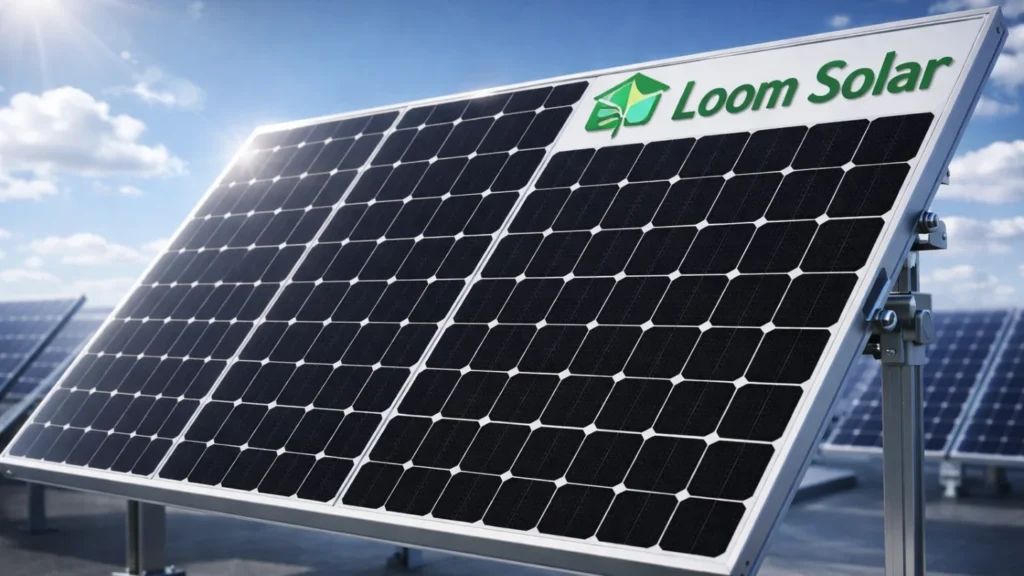
Loom Solar Panels generally use monocrystalline technology, which is known for producing more electricity compared to regular panels. The biggest advantage of monocrystalline panels is that they can deliver good output even in low sunlight and also last longer. Loom Solar Panels are expected to offer efficiency levels of around 19% to 22%, which helps generate more power even if your rooftop area is limited. These panels can also perform well in hot summers and rainy conditions, but proper installation and regular cleaning are important to maintain good performance.
On-Grid vs Hybrid Solar System Difference
When you install Loom Solar Panels, you may get the option of choosing between an on-grid system and a hybrid system. An on-grid solar system is connected directly to the electricity grid, and the power generated during the day is used in your home. If extra electricity is produced, it is sent back to the grid, and you can get credits through net metering. A hybrid system includes battery support, which means you can store electricity for night use and also get backup during power cuts. If power cuts are common in your area, a hybrid system can be a better choice.
Inverter and Battery Backup Support
The inverter plays an important role in a solar system because it converts DC power generated by the panels into AC power used by home appliances. Loom Solar setups are expected to support good-quality inverters with safety features. For battery backup, users may get options like lithium batteries and tubular batteries. Lithium batteries charge faster and provide longer backup, while tubular batteries are usually a more budget-friendly option. If you want your fans and lights to work even during power cuts, choosing a battery-based setup is the right decision.
Smart Monitoring and Mobile App Features
Today, many people want a smart solar system that can be monitored using a smartphone. Loom Solar Panels may offer a monitoring system where you can check solar generation and usage details through a mobile app or display. This helps you understand whether your system is working properly or not. If output drops on any day, you can quickly identify if cleaning is needed or if there is any technical issue. This feature is very useful for people who want to track solar performance regularly and manage electricity usage more efficiently.
Price and Government Subsidy Benefits
The price of Loom Solar Panels depends on the system size and overall setup configuration. A 1kW system may cost around ₹45,000 to ₹70,000. A 3kW system can cost around ₹1.3 lakh to ₹2.2 lakh. If you choose a 5kW system, the price may range between ₹2.5 lakh to ₹3.8 lakh. If you add battery support and a hybrid inverter, the cost can increase further. In many areas, rooftop solar subsidy benefits may also be available, which can reduce the total cost and help recover the investment faster.
How Much Can You Save on Electricity Bills?
A 3kW Loom Solar system can generate around 12 to 15 units per day. This can reach around 350 to 450 units per month. Because of this, homes that normally get an electricity bill of ₹2000 to ₹4000 can see a major reduction. With a 5kW system, savings can be even higher, and in some cases, the bill may become almost zero. With net metering, extra electricity sent to the grid can also provide credits, increasing long-term benefits.
Is Loom Solar Panel a Good Choice or Not?
If you want a solar panel system that delivers good output even in low sunlight, offers long life, and reduces your electricity bill significantly, Loom Solar Panels can be a good option. By selecting the right system size based on your needs, you can create a suitable setup for your home or shop. If the installation is done properly and maintenance is done on time, this solar system can provide strong benefits for many years.